
Root Canal Treatment:
Procedure, Cost & Pain – Everything You Need to Know
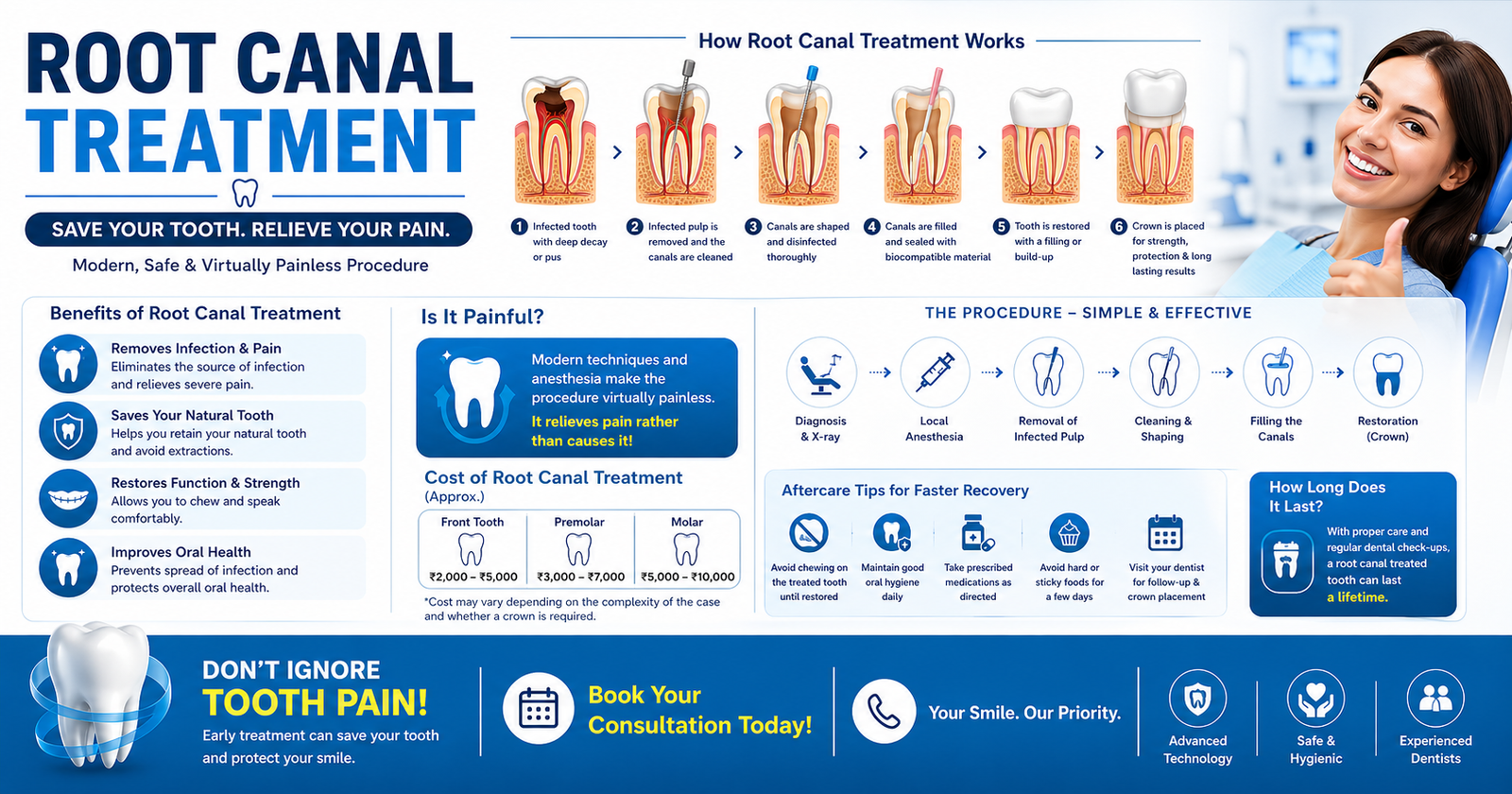
Dental pain can be one of the most uncomfortable experiences, often affecting your ability to eat, sleep, and focus on daily activities. One of the most common and effective treatments for severe tooth pain caused by infection or decay is a root canal treatment. Despite its reputation, modern root canal procedures are safe, relatively painless, and highly effective in saving natural teeth.
In this comprehensive guide, we’ll walk you through everything you need to know about root canal treatment — including the procedure, cost, pain levels, and aftercare.
What is Root Canal Treatment?
A root canal treatment (RCT) is a dental procedure used to repair and save a tooth that is badly decayed, infected, or damaged. Inside every tooth is a soft tissue called the pulp, which contains nerves and blood vessels. When this pulp becomes infected due to deep decay, cracks, or trauma, it can cause severe pain and swelling.
During a root canal, the infected pulp is removed, the inside of the tooth is cleaned and disinfected, and then it is sealed to prevent further infection.
When Do You Need a Root Canal?
You may need a root canal if you experience:
- Persistent tooth pain
- Sensitivity to hot or cold that lingers
- Swelling or tenderness in the gums
- Darkening or discoloration of the tooth
- A pimple-like swelling on the gums (abscess)
Ignoring these symptoms can lead to more serious infections, bone loss, or even tooth loss.
Step-by-Step Procedure of Root Canal Treatment
Modern root canal treatments are typically completed in 1–2 visits, depending on the severity of the infection. Here’s what to expect:
- Diagnosis and X-ray
Your dentist will examine the affected tooth and take X-rays to assess the extent of infection and determine the shape of the root canals.
- Local Anesthesia
The area around the affected tooth is numbed using local anesthesia, ensuring that you feel little to no pain during the procedure.
- Removal of Infected Pulp
A small opening is made in the tooth to access the pulp chamber. The infected or damaged pulp is carefully removed.
- Cleaning and Shaping
The root canals are cleaned, disinfected, and shaped using specialized instruments to remove bacteria and debris.
- Filling the Canals
Once cleaned, the canals are filled with a biocompatible material (usually gutta-percha) to seal them.
- Restoration
The tooth is then restored with a filling or crown to regain its strength and functionality. In most cases, a crown is recommended for long-term durability.
Is Root Canal Treatment Painful?
One of the biggest misconceptions about root canal treatment is that it is extremely painful. In reality, modern techniques and anesthesia have made the procedure almost painless.
- During the procedure: You may feel slight pressure, but no significant pain.
- After the procedure: Mild discomfort or sensitivity is normal for a few days and can be managed with prescribed or over-the-counter pain relievers.
In fact, root canal treatment relieves pain rather than causing it, as it removes the source of infection.
Cost of Root Canal Treatment
The cost of root canal treatment can vary depending on several factors, including:
- The location of the clinic
- The complexity of the case
- The tooth involved (front tooth vs molar)
- Whether a crown is required
Average Cost in India:
- Front tooth: ₹2,000 – ₹5,000
- Premolar: ₹3,000 – ₹7,000
- Molar: ₹5,000 – ₹10,000
- Crown (optional but recommended): ₹3,000 – ₹15,000-depends on quality and material
While the cost may seem significant, saving your natural tooth is usually more cost-effective than extraction followed by implants or bridges.
Benefits of Root Canal Treatment
Root canal treatment offers several advantages:
- Pain relief: Eliminates the source of infection and discomfort
- Tooth preservation: Saves your natural tooth
- Improved oral health: Prevents spread of infection
- Better chewing ability: Restores normal function
- Aesthetic appearance: Maintains your natural smile
Aftercare Tips for Faster Recovery
Proper care after a root canal is essential for healing and long-term success:
- Avoid chewing on the treated tooth until it is fully restored
- Maintain good oral hygiene (brushing and flossing daily)
- Take prescribed medications as directed
- Avoid hard or sticky foods for a few days
- Visit your dentist for follow-up and crown placement if needed
- Crown can give you added benefit after Root canal treatment.
How Long Does a Root Canal Last?
With proper care and regular dental check-ups, a tooth that has undergone root canal treatment can last a lifetime. The placement of a crown significantly increases the durability and strength of the treated tooth.
Common Myths About Root Canal Treatment
Myth 1: Root canals are very painful
Fact: Modern procedures are almost painless and relieve discomfort.
Myth 2: It’s better to remove the tooth
Fact: Saving your natural tooth is always the best option whenever possible.
Myth 3: Root canal treatment causes illness
Fact: This is a myth with no scientific evidence. Root canals are safe and effective.
When to See a Dentist
If you are experiencing any signs of tooth infection or persistent dental pain, it is important to consult a dentist immediately. Early diagnosis can prevent complications and reduce the need for more extensive treatments.
Conclusion
Root canal treatment is a highly effective procedure designed to save your natural tooth and relieve pain caused by infection. With advancements in dental technology, the treatment is now comfortable, quick, and reliable.
If you are dealing with tooth pain or suspect an infection, don’t delay seeking professional care. Timely treatment can help you avoid complications and restore your oral health with confidence.